Showing posts with label facts. Show all posts

June 23, 2010

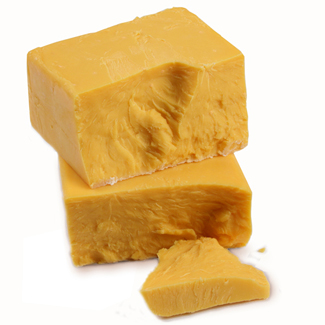
FACTS: Cheddar basics

By Erica

I like to think that I know a lot about cheese. We've been writing this blog for many months now, so I must have learned something. The other day, though, I was eating a fist sized chunk of cheddar cheese-- as I do--and I realized that I did not know what cheddar cheese was. I knew what it tasted like, but I did not know what made it that way. How embarrassing.

The essence of cheddar cheese comes from a process called, unsurprisingly, cheddaring. But before we get to that, a little history:

The first record of the existence of cheddar dates back to 1170 in England, although legend has it that the recipe was brought over from France by the Romans. It wasn't until 700 years later, though, that cheddar became the cheese that we know today.

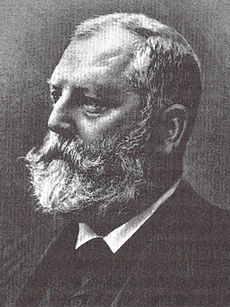
Joseph Harding, "the father of cheddar cheese", or as I like to call him, the Gutenberg of Cheddar, standardized and sanitized the making of cheddar in the 1800s. He invented lots of equipment, including a machine that cut curds, that provided the cheese making processes with a defined structure.

(Side note: Wikipedia writes that "the 'Joseph Harding method' was the first modern system for cheddar production based upon scientific principles." I originally read that last phrase as "scientific method" and spent a while trying to figure out why cheese making would require an a priori hypothesis.)

Now we come to what makes cheddar cheddar. Cheddaring is when after being heated, the curds are kneaded with salt before the whey is drained. After this, the cheese can be shaped and aged for any amount of time (longer = sharper). Harding said cheddar is supposed to be firm, mellow, and with a hint of hazelnut. It is also often orange, but this comes from added coloring, usually from paprika oil and/or annatto, a natural red dye that comes from a scary tree pod (see picture below).


And there you have it. That's all I learned about cheddar.

...except for this fact that I couldn't fit in anywhere: For the 1964 World's Fair in New York, Wisconsin created a 34,951 pound hunk of cheddar cheese from the milk of 16,000 cows.

Sources:
-Just wikipedia. Sorry.

June 6, 2010

Facts: Moose Cheese

By Kara

In Bjurholm, Sweden, about 8 hours north of Stockholm, live three female moose. They were domesticated as calves after being abandoned by their mother, and their names are Juna, Halga, and Gullan. Although I've never met them, they are currently my favorite moose in the world.

Why? Because Juna, Halga, and Gullan are cheesemakers! (Kudos also to the farmers behind the operation, Christer and Ulla Johansson. Check out the website for their farm, Elgens Hus, here - bring your Swedish dictionary.)

Moose only lactate 3-5 months out of the year, and these three ladies are the only cows milked at Elgens Hus. What's more, moose are notoriously finicky when it comes to being milked, and even small disturbances can cause temporary "dry-ups." A gentle and thorough milking can take up to 2 hours - at which point, the milker has only made about 1 gallon of progress toward the ultimate goal. This results in a very rare, and thus very expensive product: as of last summer, moose cheese from Elgens Hus was selling for about $420 per pound, and was only available in Sweden. Some claim that this is the most expensive cheese in the world, although other candidates (such as Serbian donkey's milk cheese) have also been proposed.

But it's not all hype: moose milk is high in butterfat, which would lead me to believe it could make a yummy (if gamey) cheese. Relative to cow's milk, moose milk is also higher in aluminum, iron, selenium, and zinc. In liquid form, it is served to Russian sanatorium residents in order to facilitate recovery from long-term illness. Who knows what it could do in the form of a cheddar?

Sources:

May 25, 2010

FACTS: Cheese for Vegans

By Erica


One consequence of living in a hippy town like Madison is that you start to question your life choices. Do I drive my car too much? How much trash do I produce per week? And, the hardest one for me, should I become a vegetarian? which inevitably becomes the much scarier, should I become a vegan?

I quickly realized that while vegetarianism could possibly exist in my future, I could never become a vegan. That would mean giving up cheese, which would mean giving up one of life's greatest pleasures. No way. Apparently, though, giving up cheese is a major hurdle for many wanna be vegans. Anthony Grani, Toronto-based filmmaker and vegan, even created a blog called "Vegan Cheese Reviews", dedicated to finding the tastiest non-dairy based "cheese".

Enter Daiya, a cheese substitute made mainly from Tapioca and water. Two Canadians, Greg Blake and Andre Kroecher, are the masterminds behind the food product (pictured above in a grilled cheese sandwich). Kroecher first started trying to make vegan cheese in 2005 by experimenting in his own kitchen. By 2007, with the help of Blake, he perfected the recipe and began looking to sell Daiya. It premiered at the Natural Products Expo West in Anaheim, California in the form of a dairy-free cheese pizza and was an instant success. Daiya is picking up steam and was named Product of the Year at the 2009 Veggie Awards.

Daiya is available in many stores around the U.S. (including at the Whole Foods in Madison). I'm intrigued enough to search it out, but don't count on me leading a cheese-less vegan life anytime soon!

Sources:
-Macleans article on Daiya
-Daiya website

May 19, 2010

FACTS: Parrano

By Kara

We've received a cheese tip from a source in Tennessee: try some Parrano! (Our source found it at Whole Foods.)

If nothing else, Parrano cheese is well marketed: a quick internet search reveals dozens of unique (and consistently positive) reviews and just as many mouth-watering pictures. Parrano may be the first cheese we've encountered that lays claim to its own domain name. (We'll leave it to our readers to find whatever is located at your favorite cheese's .com...) Hats off to the people at UnieKaas (the unique producers of Parrano cheese) for such an effective cheese-marketing campaign! (Also see their page on "The Good Life" for some general advice about friends, family, and well-being.)

I have to poke a little fun at a cheese campaign that takes itself so seriously... But I also have to say that Parrano does sound delicious. It's a Dutch, Italian-style gouda, affectionately referred to as "The Dutch cheese that thinks its Italian" (Wikipedia.org), "Dutch cheese with an Italian accent!" (About.com), and "the unforgettable cheese with a distinctly Italian temperament" (Parrano.com). The flavor is described as nutty and sweet, similar to a mellow Parmesan. If you're wondering what the Dutch have brought to bare on this cheese, look to the texture: despite its Italian self-identity/accent/temperament, Parrano is solidly (or rather, smoothly and pliantly) Gouda in texture. It's a fairly young cheese, aged for 5 months, and it's good for shredding, slicing, or melting. In terms of taste, texture, and certainly versatility, Parrano seems to be close to cheese perfection.

A final fact, near and dear to C:AJ's heart: Parrano won "Best in Class, Gouda" at the 2006 World Cheese Championship in Madison. We will certainly be on the lookout for a taste!

April 20, 2010

FACTS: mmmmm...Mozzarella


By Erica

Although we've mainly focused on strong, pungent cheese on C:A J, we also have love for milder cheeses. My favorite mild cheese is fresh mozzarella. The string cheese type, processed mozzarella is alright, but I love the cloud-white, tennis-ball-shaped mozzarella that melts in your mouth.

There are many subspecies of mozzarella, but they are all made by cutting up and spinning cheese curds. High in moisture, mozzarella is tastiest the day it's made; it can be kept up to a week if stored in a brine. The string cheese mozzarella (or the shredded mozzarella sold by Kraft etc... it's all the same) is very low in moisture and usually made with skim milk. The fresh, high moisture mozzarella can be made with cows milk and is then called mozzarella fior de latte. My favorite type of mozzarella, mozzarella di bufala, is made from the milk of water buffalo.

Mozzarella is relatively easy to make, too! Dr. Frankhauser's Cheese Page, a fantastic resource for those who are interested in making cheese, has detailed instructions for making your own, complete with pictures. The basic steps are extracting the cheese curds (saving the whey to make ricotta), pouring hot water over the curds and spinning them into a nicely shaped ball, then dropping the ball into cold water to harden it a bit. There are a few more steps, so I've found a lovely youtube video (below) that shows the whole process. It's pretty neat to watch, so move your cursor down and press play!


April 11, 2010

FACTS: Thermalization

By Kara

Recently, a friend recounted an experience she had in New York, in which she was presented with cheese labeled "thermalized cow." It took us a few minutes to work through our immediate confusion about this label: what would it take to "thermalize" a cow? (Try as I might, I couldn't find any images of cows in long underwear to post here, but those are the sorts of ideas that were running through our minds during this conversation.) We eventually figured out that "thermalized" probably referred to the milk of cows, rather than to some poor bovine individual. But even with the object of thermalization made clear, we were left with the question of what the process of thermalization is, and what sort of end result my friend consumed.

Thermalization, it turns out, is a process simliar to pasteurization: in short, a way to kill off some of the potentially harmful microorganisms (bacteria, viruses, etc.) found in raw milk straight from the animal.

Pasteurization (invented by Louis Pasteur in the 1860s) involves heating milk to very high temperatures (161 degrees F, or in some cases as high as 250 degrees F) for very short amounts of time (from a split second up to 20 seconds, depending on the temperature). This is a very effective method of slowing the many varieties of microbial growth that are dangerous to humans, such as the infamous Listeria (click here for Listeria's own blog!). However, such high temperatures also kill off microorganisms that are beneficial to human health - not to mention cheese tastiness.

Thermalization, by contrast, is a more moderate procedure, in which milk is heated to about 100-160 degrees F for 15-30 seconds: enough to kill many, but not all, micro-intruders (notably not Listeria). Proponents argue that thermalization yields perfectly safe cheese with a strong flavor and a host of health benefits, thanks to the bacteria and enzymes left behind. Opponents of thermalization counter that the risks are too high - and in the US, thermalized cheese is considered "raw," and must be aged at least 60 days in order to be sold legally, according FDA standards. In Europe, thermalization counts as "pasteurization." Those European radicals! It appears that a taste test (though hopefully not a stomach test) is in order... Please notify C.:A.J. if you hear of any cheap flights to France.

Sources:

April 7, 2010

FACTS: To wash or not to wash


By Erica

Have you ever wondered what determines what a cheese's rind is like? I always thought it had something to do with bacteria, and it does-- if you let cheese age on a shelf with a certain bacteria strain, the bacteria will grow on the outside of the cheese. The longer you let the cheese age, the thicker the rind will become.

But, of course, it's more complicated than that. If there's anything I've learned about cheese, it's that there's always more to learn about cheese. Another factor that contributes to rind differences (and this I learned from Felix of Capri Cheesery) is whether or not you wash the rind. Washing a rind is just what it sounds like-- as the cheese ages, you periodically bathe the cheese in a liquid, usually a brine or alcohol. This process infuses the cheese with more flavor from the rind and thus causes the cheese to become more pungent. Most softer stinky cheeses have washed rinds. The washed rind, however, remains distinct and more bitter than the cheese.

Here's a buying tip: if you're after a cheese with a thicker rind, look for one that has a distinct boundary between the rind and the cheese-- if there's a gradient of discoloration near the rind, then the bitterness of the rind has infused into the cheese, which is less than desirable.

(Pictured: Taleggio is an example of a washed rind cheese)

April 6, 2010

FACTS: Kosher for Passover?

By Kara

So you're invited to a Passover seder, and you're a cheesemonger: can you bring your favorite wedge to the seder? This simple question and the "Facts" heading on this post belie the complexities of kosher-for-passover cheeses.

For one thing, cheese is one of the few edible substances not built into the already filling seder meal. More controversial is the presence of our old friend rennet, which is often made from the stomach linings of cows and other animals (see our original rennet post here). Because rennet consists of enzymes harvested from the gut of an animal, rather than consisting of actual animal flesh, it is not considered a "meat product," and is therefore exempt from kosher laws prohibiting the mixing of milk and meat (phew!). However, in order to access this non-meat product, you still have to slaughter the animal host - so in order to get kosher rennet, both the animal involved, and the method of slaughtering, must be certifiably kosher. Different families will be more or less careful about checking on the kosher status of the rennet used in specific cheeses - but around Passover especially, better safe than sorry. There is also the possibility that a cheese has been exposed to environments that are not up to Passover standards, or that the cheesemaker has added vinegar to the product (which must also be certified kosher), or that the mold in your favorite cheese (e.g., if you like a good bleu) has been grown on bread.

There has been a recent push for reliably certified kosher-for-passover cheeses, which sound pretty yummy. (Check out Kosher Blog for some suggestions, especially if you're in the Boston area.) And there is a slew of traditional Passover meals that contain cheese (though it's probably best not to bring these dishes unsolicited).

But in the end, even if you found a delicious hunk of kosher cheddar, you still couldn't serve it with proper crackers. The conclusion: stick with the Manischewitz next year.

Sources:

February 12, 2010

FACTS: Goat milk


By Erica

Last week, we tasted a cheese from Capri Cheesery that was made with "Amish goat milk." This ingredient puzzled our pseudo-cheese-connoisseur minds (you can see this confusion unfold in real time in our tasting video), and it led me on a hunt for more information about goat milk. Here is what I learned:

1) Male goats, like male people, are stinky:
If a smelly buck (male goat) is not separated from milk-producing does (female goats), his scent will somehow rub off on the milk's taste. Apparently, people sometimes object to the goaty flavor of goat milk (to which I say, what do you expect! It's from GOATS), but this strong flavor only comes out if the bucks aren't taken away. I am curious: could one create a line of goat cheeses named after the various bucks that are around the barn when the doe is lactating?

2) Fat matters: Because of the size of the fat globules in goat milk, the cream does not separate out, and thus the milk does not need to be homogenized. Less processing is always a good thing, in cheese and in life.

3) Fatty acids matter:
The higher proportion of medium-chain fatty acids, such as capric acid, cause goat milk cheese to be uniquely tart.

4) Goats are very productive: On average, dairy goats produce 3 to 4 quarts of milk daily for 10 months.

5) Warm goat cheese is just warm goat cheese: You know how cow cheeses, like mozzerella or chedder, melt when you heat them up? This doesn't happen to goat cheeses. They just get hot.

6) Goats are everywhere: Goat cheese is made in so many places! They are a hearty creature.

-Crottin de Chavignol is a nutty cheese with a white rind from the Loire Valley
-Clochette is a bell-shaped, tangy cheese from the Poitou-Charentes region in France
-Couronne Lochoise, another French cheese, is donut shaped
-Feta!
-Mató, is a Catalan fresh cheese similar to ricotta
-Pantysgawn is a Welsh cheese with an awesome name
-Brunost is a Norwegian brown cheese. In North America, it is sold as "gjetost"
-Rubing is a firm cheese from the Yunnan Province in China. It's similar to Paneer

7) There's a market for everything: In addition to cheese, goat milk can be used to make ice cream or soap.

8) This could be your next weekend project: It's easy to make goat milk cheese!

Slowly heat a gallon of goat milk to 185°F, using a stainless steel or enamelware pot. Add 1/4 cup vinegar. Keep the temperature at 185°F, stirring the milk occasionally, for 10 to 15 minutes. At this point a soft curd should form. Line a colander or strainer with cheesecloth. Pour the curd into the colander, and sprinkle the curd with salt. Tie the corners of the cloth together and hang it to drip for a few hours.

Add seasoning such as dill, pepper, or garlic, and refrigerate. Eat the cheese immediately, or keep it no longer than a week in the refrigerator. (From the dairy goat journal.)


Sources:
http://www.goatworld.com/articles/goatmilk/goatmilk.shtml
http://en.wikipedia.org/wiki/Goat_milk_cheese
http://www.goats4h.com/Goat-Milk.html -- goat/cow/human nutrition comparison picture

January 5, 2010

FACTS: The Legend of Liederkranz


By Erica

What do a woolly mammoth and Liederkranz cheese have in common? They're both smelly! And also, they're both extinct. Emil Frey (left), a Swiss cheesemaker, created Liederkranz in 1891 (many, many years after God created the woolly mammoth). Disgustingly, Emil Frey went on to create Velveeta, an insult to cheeses everywhere. However, Liederkranz was a hit for the Monroe Cheese Company, which was situated in Monroe, New York. Named after a local singing group, Liederkranz means "wreath of song" in German. It's a soft cows milk cheese that came out of an effort to replicate Limburger. The replication was moderately unsuccessful. The cheeses are more fraternal than identical twins; their bacteria cultures--their DNA--are slightly different.

The story of Liederkranz is meandering and sad. Frey followed his beloved cheese when the Monroe Cheese Company moved to Van Wert, Ohio, where Liederkranz was manufactured even after the business was sold in 1929 to the Borden Company, which we know today as Kraft. In 1981, years after Frey had retired from cheese making, the Borden Company decided to stop all of its natural cheese lines in order to focus on processed cheese-- those that involve unfermented ingredients and emulsifiers and have the advantage of a longer shelf life (i.e. American Cheese, Laughing Cow, and Frey's own Velveeta). The Van Wert plant was bought by the Fischer Cheese Company that year and Liederkranz lived on, but only for a short time. In 1985, bacterial contamination of a batch of Liederkranz caused Fischer to discontinue the cheese entirely, and they sold the bacteria strain to The New Zealand Dairy Board. Liederkranz was never seen again.

The closest cheese to Liederkranz today is Bayrisher Bergsteiger Kase, produced by the Kutter Cheese factory in Buffalo, New York. This cheese has a similar texture and taste, but true fans of Liederkranz, "Liederkranzlers", are not impressed. Apparently, a small group is working to bring back the Liederkranz culture from New Zealand. Good luck!

December 11, 2009

FACTS: A Cheesy Vocabulary

By Kara

This week I want to be better prepared to speak about cheese. I say this with some hesitation: I'm skeptical of the lingo of expertise in most avocational domains, because I think it serves as much of a social purpose as it does a descriptive one (e.g., "Mm-herm, don't you think this is quite a nervy Sauvignon Blanc?"). My goal here isn't really to immerse myself in some sort of culture d'affinage... But I do want to be able to think about what I'm tasting, and remember different cheeses for their distinctive characteristics. If I can hang my sensory experience on some reliable words, maybe the taste will be preserved a little more vividly in my mind. Also, maybe Erica and I will be able to sum our our thoughts in under 5 minutes of babble.

So I've been poking around websites and leafing through books, and I've assembled a few lists to get us started.

To describe the texture of cheese, people use words that are for the most part pretty straightforward: airy
, bold, buttery, chalky, creamy, crumbly, curdy, custardy, delicate, dense, firm, flaky, fluffy, fudgy, gooey, grainy, hard, luscious, melting, moist, mouthfilling, oily, pasty, pillowy, pliable, rubbery, runny, sandy, smooth, soft , spreadable, striated, sturdy, supple, thick, veined, velvety, voluptuous, waxy, yielding. Most of these words seem like they correspond well to descriptions of other textures. "Curdy" is a little special, but I'm pretty sure that it's a literal term, referring to the concept of cheese curds (i.e., not dense, rubbery, solid but pliable). I'm thinking a luscious cheese would be super creamy and velvety... as would a voluptuous variety, though this might be a little thicker and gooier. I love the concept of "mouthfilling" - I've looked around online a bit, and it seems like this describes the experience of a complex combination of flavors that feels like it requires the whole tongue, oral cavity, nasal passages, etc., to fully experience. Yum.

To describe the aroma and flavor of cheese, people use slightly quirkier words: acidic, biting, bright, burned, buttery, chemical, creamy, delicate, dry, electric, goaty, lactic, lingering, mean, mild, milky, moldy, popping, pungent, rich, roasted, salty, sharp, smokey, sour milk, stinky, stringent, strong, sweet, tangy, tart, vibrant. "Bright" and "electric" seem to be used most frequently to talk about blue/eu cheeses - maybe this corresponds to something sort of sour and tangy, somehow "shocking." "Stringent" seems to be a similar sort of flavor, kind of acidic and often used to describe moldy cheese. I gather that a vibrant cheese has a strong but fairly simple flavor... but for the life of me I can't figure out what would make someone call a cheese "mean."

Often adjectives just don't suffice. (Some speculate that this because taste and smell are processed largely in the "deep," subcortical areas of the brain, meaning there's a long neural road to travel between those types of sensory experiences and the formulation of sentences to describe them.) In these cases, cheese-lovers turn to analogies to describe the flavors they detect:
almond, ammonia, apple, apricot, artichoke, barnyard, berry, brothy, butterscotchy, candied, caramel, catbox, chocolate, cinnamon, citrus, earthy, fermented, floral, fruity, grassy, hay, hazelnut, herbaceous, herbal, humus, lemony, mushroomy, nutmeg, nutty, onion, peanut, pear, pepper, plum, spicy, straw, toasty, toffee, vanilla, vegetable, walnut, wet grass, wet wool, wheat, yeasty. I'm having a little bit of a hard time imagining a cheese that tastes brothy or mushroomy, but these words show up all the time, so I guess I'll get a taste of it soon enough. I sort of hope to avoid anything with notes of barnyard, catbox, or wet wool... but I certainly wouldn't mind overtones of caramel or pear!

Some of these words have some physical/chemical basis (fat content, level of moisture, diet of mammal, etc.) - others originate in the associative mind of the taster (at least, I hope they do). I think the take-home lesson here is that when it comes to describing and remembering cheese, free association is strongly encouraged. The descriptions I read ranged from poetic ("delicately floral") to disturbing (I still can't get over "catbox"), but none lacked creative flair. The task for our next tasting is to breathe in, let go, and let the tasting mind wander.